
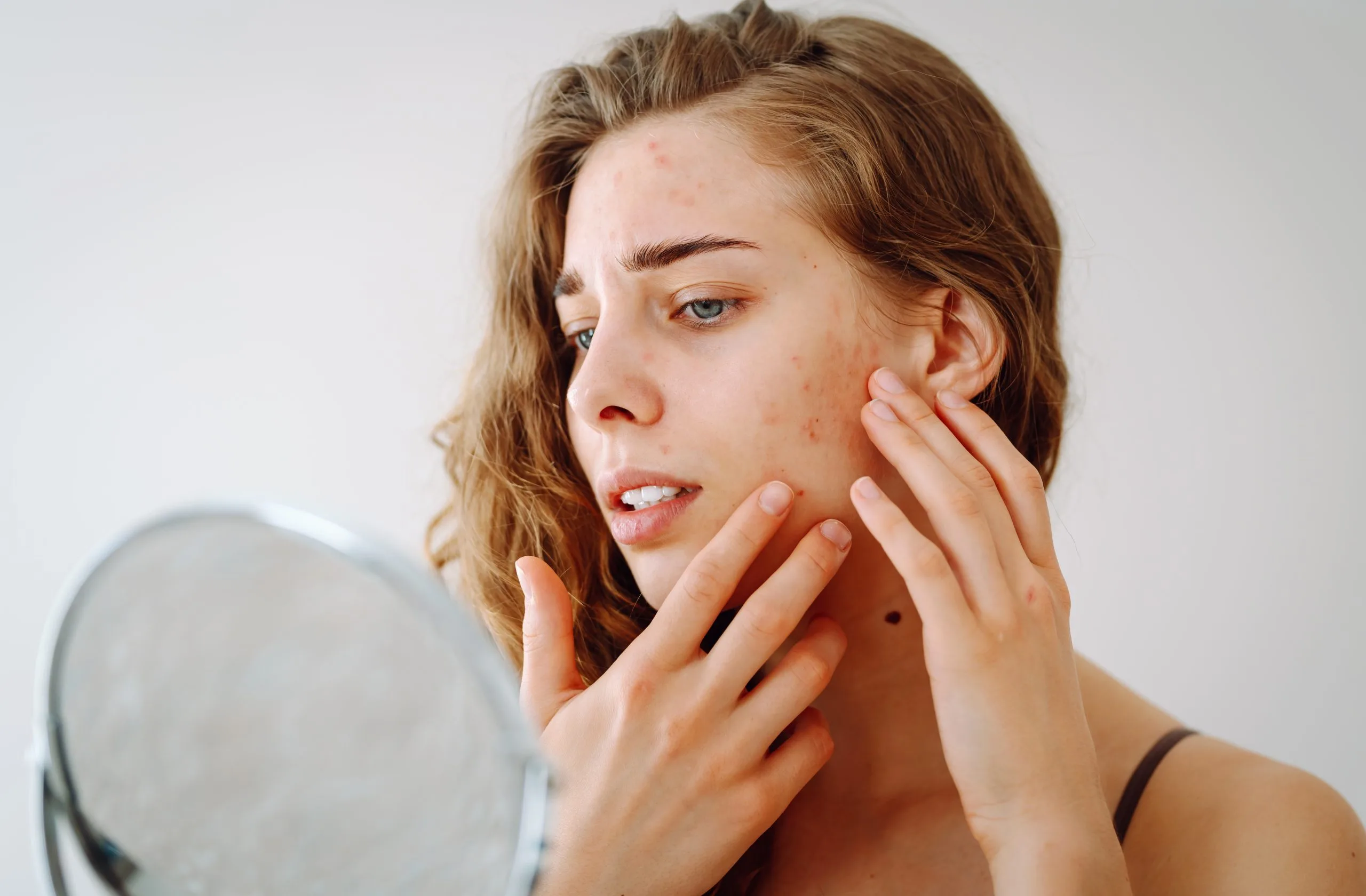


Sun & Age Spot
Removal.
Cleared.
Every sun spot is a record of accumulated UV exposure — melanin the body deposited in response to light it could not deflect. FDA-cleared laser technology at Couture Dermatology targets that melanin with wavelength-specific precision, eliminating it without disturbing the healthy skin surrounding it. A clearer, more even complexion is not achieved gradually. It is revealed.
isolated spots
duration
laser technology
"Clarity is not a correction. It is the skin finally given permission to be itself."
What You're
Actually Seeing
Age spots — clinically called solar lentigines — are not a sign of aging skin in itself. They are a sign of sun-exposed skin that has responded to UV radiation by producing concentrated deposits of melanin in the epidermis. The skin's intent was protection. The result is visible as flat, well-defined brown or tan patches that topical brightening agents can fade but rarely resolve.
They appear most commonly on the face, hands, forearms, shoulders, and décolletage — the areas that receive the most cumulative sun exposure across a lifetime. Genetics determines the ease with which they form. Sun protection determines whether they return after treatment.
Laser pigmentation treatment at Couture Dermatology does not suppress melanin production with a topical inhibitor. It eliminates the existing melanin deposit entirely — using wavelength-specific laser energy that is selectively absorbed by melanin-rich cells, leaving the surrounding tissue completely undisturbed. The body then clears the fragmented pigment through its lymphatic system over the following two to four weeks, revealing the unspotted skin that was always present beneath.
This is the defining advantage of laser treatment for pigmentation: it operates at the level of the existing deposit — not the surface above it, not the melanocyte responsible for producing it. The targeted spot is eliminated at the source.
Not all brown marks are solar lentigines. Some flat pigmented lesions warrant dermatoscopic assessment before treatment — seborrhoeic keratoses, lentigo maligna, and early melanocytic lesions can appear clinically similar to benign sun spots. At Couture Dermatology, every pigmented lesion is assessed by our board-certified FAAD dermatologist before any energy-based treatment is performed. This is not a protocol step — it is a clinical standard.
What Happens
at Each Session
Sun and age spot removal at Couture Dermatology is efficient, precise, and comfortable. Most sessions take no longer than a lunch break — though the preparation and assessment before treatment are never abbreviated.
Assessment & Mapping
Your board-certified FAAD dermatologist examines each pigmented lesion individually — assessing its character, depth, and suitability for laser treatment. This clinical step is non-negotiable and takes place before any energy is delivered. Parameters are set specifically for your skin type and the character of each spot, not applied from a template.
Laser Treatment
The FDA-cleared laser delivers targeted pulses of wavelength-specific light energy to each pigmented area. Melanin in the treated cells selectively absorbs this energy — causing it to fragment — while the surrounding healthy skin is completely unaffected. The sensation is brief: a rapid snapping warmth that resolves within seconds. Sessions typically take 20 to 45 minutes for the face and hands.
Clearance & Results
In the days following treatment, the targeted spots darken temporarily as fragmented melanin aggregates — this is the expected response. Over the following 7 to 14 days, the treated area peels gently to reveal the clear skin beneath. Your dermatologist assesses clearance at a follow-up appointment 4 to 6 weeks later and advises on whether a further session is indicated.

typically achieved
The Changes
You Will See
Elimination of Existing Spots
The treated melanin deposits are fragmented and cleared by the body permanently — those specific spots do not return. Most isolated sun spots and age spots respond completely in 1 to 3 sessions. Deeper or more established pigmentation may require additional treatment, assessed at follow-up.
Dramatically More Even Skin Tone
Beyond the removal of individual spots, laser pigmentation treatment creates a visible improvement in the overall uniformity of the skin tone. The areas of concentrated darkness that draw the eye and age the complexion are resolved — leaving a skin tone that reads as consistent, luminous, and healthy from any distance.
No Disruption to Surrounding Skin
The selective photothermolysis mechanism means the laser energy is absorbed exclusively by melanin-rich cells — not the surrounding keratinocytes, vessels, or connective tissue. The healthy skin in which your spots sit is completely undisturbed during treatment and does not require any healing. Recovery is confined to the treated pigmented areas alone.
Results That Topicals Cannot Achieve
Brightening serums and hydroquinone formulations inhibit tyrosinase — the enzyme that produces melanin — but they cannot eliminate existing melanin deposits in the epidermis. Laser treatment does not suppress; it resolves. The improvement is structural and immediate, where topical treatment is suppressive and temporary. The two approaches serve different purposes; they are not interchangeable.
"[Insert verified patient testimonial about their sun or age spot removal experience at Couture Dermatology. Should be specific — e.g., number of sessions, which area was treated, how it looked before and after, and how quickly results appeared. Replace with patient first name + last initial, city, and whether they are a verified patient.]"
— [Patient Name, e.g. Sarah M.] · [City, e.g. Beverly Hills] · Verified Patient · [Date optional]
Board-Certified FAAD
Every pigmented lesion assessed and treated by Dr. Chinonso Kagha Abisogun, MD, FAAD — a Fellow of the American Academy of Dermatology
Clinical Assessment First
All pigmented lesions are dermatoscopically assessed before treatment — ruling out atypical lesions and confirming laser suitability
FDA-Cleared Laser
Only FDA-cleared wavelength-specific laser platforms used — parameters calibrated to your Fitzpatrick type and pigmentation depth
Wilshire Blvd, Beverly Hills
9735 Wilshire Blvd, Suite 216, Beverly Hills, CA 90212 · (310) 444-0946
Body Areas We Address
Sun and age spot laser removal is not confined to the face. Any area where UV exposure has left its visible record is treatable — with parameters adjusted for the skin thickness and sensitivity of each anatomical zone.
Face
Cheeks, forehead, nose, and temples — the highest-UV-exposure zones and the most visibly affected
Hands & Fingers
The back of the hands ages visibly with pigmentation; laser treatment restores a dramatic clarity
Décolletage
The chest and upper sternum — often severely sun-damaged and among the areas patients are most self-conscious of
Shoulders & Arms
Diffuse UV-induced pigmentation across the upper body from years of outdoor exposure
Neck
The anterior and lateral neck — an area often neglected in daily SPF application and consequently pigment-affected
Scalp & Hairline
Accessible areas of the scalp and temporal hairline where UV exposure accumulates across decades
Extend Your Results
With…
Laser spot removal eliminates what is already present. These complement it — maintaining clarity, refining overall skin quality, and protecting the investment in your skin's future.
Laser Skin Resurfacing
When pigmentation exists alongside textural concerns — fine lines, enlarged pores, or acne scarring — a fractional laser resurfacing series addresses both in a unified programme. Pigmentation clearance and skin quality improvement are sequenced to maximise each modality and minimise total recovery time. The most comprehensive skin renewal result achievable without surgery.
Explore laser resurfacing →Medical Chemical Peels
A prescribed peel programme — typically glycolic or mandelic acid-based — accelerates epidermal turnover between laser sessions, extending the clarity achieved with each treatment. For diffuse tonal unevenness and mild sun damage, a sequenced peel and laser protocol is often the most efficient path to a uniformly bright, even complexion.
Explore peels →Medical-Grade SPF & Brightening
The spots that laser treatment eliminates are gone permanently. But continued unprotected UV exposure will create new ones. Daily broad-spectrum SPF 50+ is non-negotiable for maintaining results. A prescribed brightening protocol — vitamin C, niacinamide, and targeted melanin-suppressants recommended by your dermatologist — works alongside sun protection to keep the complexion clear and prevent recurrence.
Explore all treatments →Your Spots.
Our Precision.
Not all pigmented lesions are the same — in character, depth, or appropriate treatment. At Couture Dermatology on Wilshire Blvd, your board-certified FAAD dermatologist assesses every spot individually before recommending a laser protocol. Candidacy, session estimate, and treatment plan are determined at your consultation, not before it.
Beverly Hills, CA 90212
Frequently
Asked Questions
Honest answers to the questions patients most commonly bring to their consultation — on sessions, skin tone, permanence, and downtime.
Most isolated sun spots and age spots respond fully in 1 to 3 laser sessions. More diffuse or deeply pigmented areas — including extensive sun damage across the face and hands, or post-inflammatory hyperpigmentation — typically require 3 to 5 sessions spaced 4 to 6 weeks apart. Your board-certified FAAD dermatologist will assess each pigmented lesion at your consultation and provide a precise estimate for your specific situation.
Immediately after treatment, the targeted spots typically darken and may develop a mild crust — this is the expected biological response as the fragmented melanin aggregates before clearance begins. The darkened area gradually peels away over 7 to 14 days to reveal the clear, unmarked skin beneath. This process should not be rushed or manually disrupted. Full clearance is assessed at a follow-up appointment 4 to 6 weeks post-treatment.
The treated spots are permanently resolved — the melanin that constituted them is eliminated and will not regenerate in the same location. However, the melanocytes in your skin remain active, and continued unprotected UV exposure will stimulate new pigmentation in previously clear skin over time. Daily broad-spectrum SPF 50+ and a prescribed maintenance skincare protocol are essential for preserving results. Laser treatment clears what is there; sun protection prevents what comes next.
Laser pigmentation treatment requires careful parameter selection based on Fitzpatrick skin type. In darker skin types (Fitzpatrick IV–VI), there is a higher inherent risk of post-inflammatory hyperpigmentation if fluence or wavelength selection is not precisely calibrated. Modern platforms offer settings appropriate for a broader range of tones, but the clinical expertise of the treating physician is the most critical variable. Our board-certified FAAD dermatologist will assess your skin type at consultation and advise whether laser treatment is appropriate, and at what parameters it can be performed safely.
Immediately post-treatment, the treated area will be red and mildly swollen — similar to a brief sunburn, resolving within a few hours. The spots themselves darken over 24 to 48 hours before beginning to peel over the following week or two. Most patients return to work and daily activities within 1 to 3 days, with treated areas easily covered by light mineral makeup after the first 24 hours. We provide a full aftercare protocol at your appointment covering each day of the post-treatment period.
Yes — pigmentation laser treatment integrates well with medical chemical peels (scheduled 4 to 6 weeks before to prime the epidermis), fractional laser resurfacing (for comprehensive skin renewal addressing both tone and texture in a sequenced programme), and a prescribed brightening skincare protocol that extends clarity and prevents recurrence. Your dermatologist will design the right sequence based on the full picture of your skin and your goals.