
Melasma Correction
in Beverly Hills.
Clarified.
Melasma is one of the most complex pigmentary conditions in dermatology — and one of the most mismanaged. At Couture Dermatology, your board-certified FAAD dermatologist builds a multi-modal correction plan that addresses the melanocyte hyperactivity at the root of the condition, not just its appearance on the surface. Lasting clarity requires more than a single treatment. It requires a strategy.
types — each treated differently
begins within
critical part of any plan
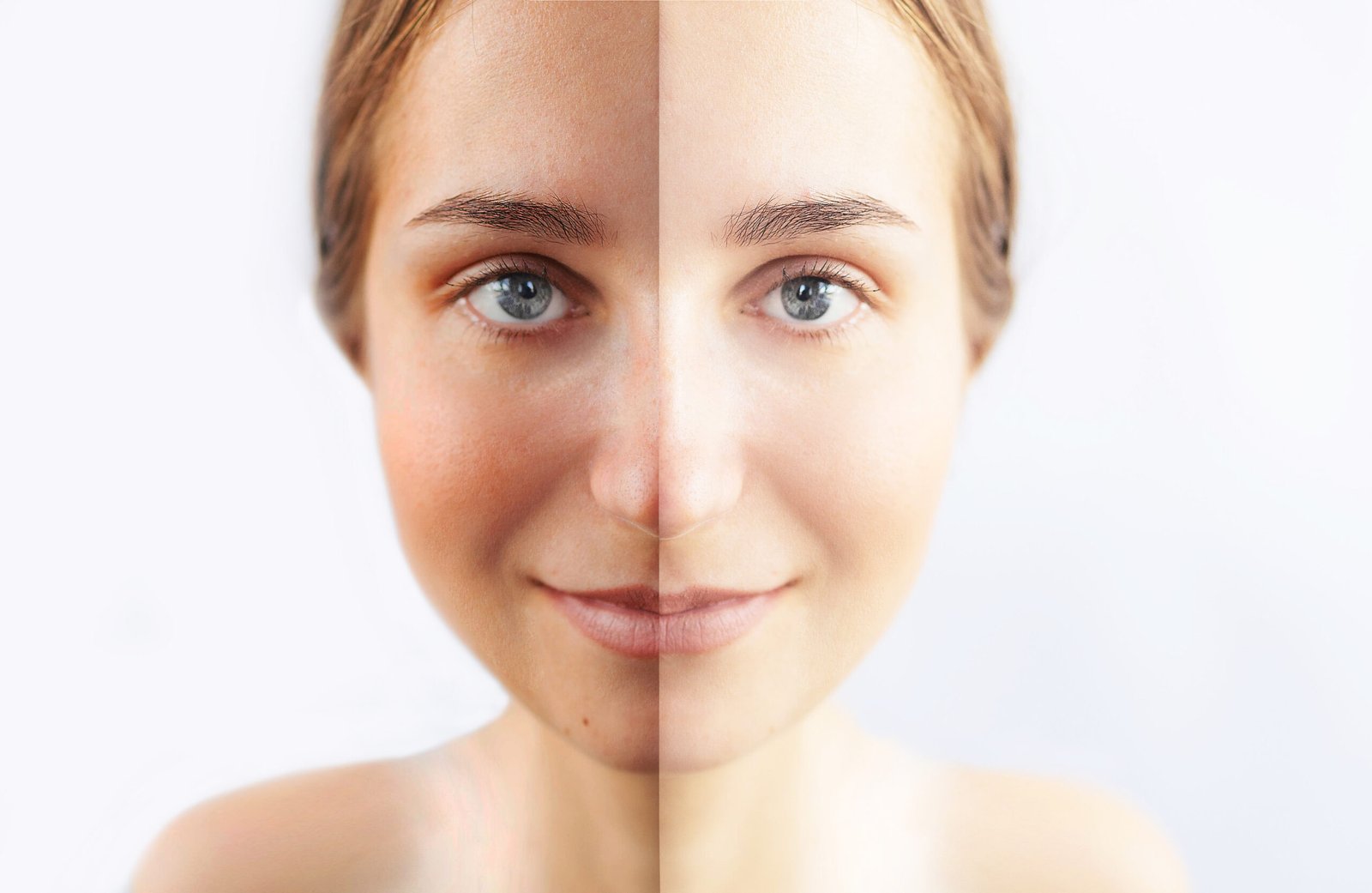
"Clear skin is not luck. It is a protocol, followed precisely."

What Is Melasma?
Melasma is a chronic, relapsing pigmentary disorder characterised by symmetrical patches of brown, grey-brown, or blue-grey discolouration on UV-exposed skin — most commonly the cheeks, upper lip, forehead, chin, and bridge of the nose. It is not a surface stain. It is a dysfunction of the melanocytes themselves: cells that have been chronically overstimulated into producing melanin far beyond what the skin needs.
The condition is strongly associated with oestrogen and progesterone — which is why it appears disproportionately in pregnant women (earning the name chloasma, or the "mask of pregnancy"), in those taking oral contraceptives or hormone replacement therapy, and in women with thyroid dysfunction. UV radiation is the most universal trigger: even brief, incidental sun exposure can reactivate melanocytes that have been previously treated into quiescence.
What makes melasma uniquely challenging is that it does not respond to treatment the way most pigmentation does. Aggressive laser protocols that easily clear sunspots can worsen melasma through the heat and inflammation they generate — triggering post-inflammatory hyperpigmentation that compounds the original condition. Effective melasma management requires a dermatologist with specific expertise in the condition, its subtypes, and the interaction between treatment modalities and individual skin biology.
The Three Types
of Melasma
Melasma is not one uniform condition. Its depth within the skin determines which treatment modalities will work, which may worsen it, and what realistic results look like. Correct classification is the first and most important step in your plan.
Most Responsive
Epidermal Melasma
Melanin deposits confined to the epidermis — the outermost layer of the skin. Epidermal melasma appears as well-defined brown patches that intensify under Wood's lamp examination. It is the most responsive type to treatment, clearing most reliably with prescription topical agents, chemical peels, and low-energy laser when managed correctly. Strict photoprotection is essential to prevent rapid recurrence.
Best prognosisMore Challenging
Dermal Melasma
Melanin deposited deeper in the dermis, often within macrophages rather than melanocytes. Dermal melasma appears blue-grey or ashy rather than brown, is poorly defined at its borders, and does not intensify under Wood's lamp. It is resistant to topical agents and requires longer, more carefully designed treatment programmes. Laser selection and parameter settings are critical — incorrect protocols risk worsening rather than improving the condition.
Requires specialist managementMost Common
Mixed Melasma
A combination of epidermal and dermal components — the most frequently encountered type in clinical practice. Mixed melasma shows features of both under examination: some areas respond well to treatment while others are more stubborn. Management requires a layered protocol that addresses both depths, progressing from surface-level topicals and peels into more targeted laser modalities as the epidermal component clears. Results are gradual and require patience.
Layered approach requiredA Protocol Built
for Your Skin
Melasma demands a phased approach. At Couture Dermatology, no two patients receive the same plan — because no two presentations of melasma are identical in depth, trigger profile, skin type, or lifestyle.
Diagnostic Assessment
Your FAAD dermatologist examines the pattern, depth, and character of your melasma — using Wood's lamp assessment to classify epidermal versus dermal involvement. Your hormonal history, sun exposure habits, skincare history, and previous treatments are all discussed. Accurate classification drives every decision that follows.
~25 minutesPrescription Topical Phase
For most patients, treatment begins with a prescribed depigmenting topical regimen — typically hydroquinone, tranexamic acid, kojic acid, azelaic acid, or a combination — to begin suppressing melanocyte activity and priming the skin for subsequent in-office treatments. This phase lasts 4 to 8 weeks and is the foundation of the entire protocol.
4–8 weeksIn-Office Treatments
Chemical peels, low-fluence laser sessions, or a combination are introduced once the skin is appropriately primed. Modalities and parameters are selected based on melasma type, Fitzpatrick classification, and response to the topical phase. Sessions are spaced to allow full inflammatory resolution between treatments — preventing the rebound pigmentation that over-aggressive protocols cause.
Every 3–6 weeksMaintenance & Prevention
Clearance achieved without a maintenance plan will not last. Your dermatologist prescribes an ongoing regimen — topical agents used in rotation to prevent tachyphylaxis, scheduled maintenance sessions, and an uncompromising daily SPF 50+ protocol. The goal is not remission from treatment. It is skin that stays clear indefinitely.
OngoingWhy Melasma Requires
More Than One Answer
The single most common reason melasma fails to respond to treatment is that it is treated as a single problem with a single solution. It is not. It is a chronic, multi-factorial condition that requires each of its drivers — UV activation, hormonal influence, inflammatory melanocyte stimulation — to be addressed simultaneously and maintained indefinitely.
"The patients who achieve lasting melasma clearance are not the ones who found the right treatment. They are the ones who followed the right strategy."— Couture Dermatology, Beverly Hills, CA
Who is most affected by melasma?
- Women during or after pregnancy — chloasma (hormonal melasma)
- Patients on oral contraceptives or hormone replacement therapy
- Fitzpatrick types III–VI — darker skin tones are disproportionately affected
- Those with significant UV exposure history in sun-heavy climates
- Patients with thyroid disorders or hormonal imbalances
- Anyone with a family history of melasma or chronic hyperpigmentation
Prescription Topical Agents
Hydroquinone — the gold standard melanocyte inhibitor — suppresses the enzyme tyrosinase, directly blocking melanin synthesis. It is prescribed in 4% concentration, cyclically, to prevent tolerance. Tranexamic acid, azelaic acid, and kojic acid are prescribed in combination or rotation based on skin tolerance, Fitzpatrick type, and response. The right prescription skincare is the backbone of every melasma protocol.
Medical-Grade Chemical Peels
Glycolic acid, mandelic acid, and kojic acid peels accelerate epidermal turnover — removing the melanin-laden corneocytes that form visible pigment patches while delivering active depigmenting agents deeper than topical application alone allows. Mandelic acid is particularly valuable for darker skin tones due to its larger molecular size and lower inflammatory potential. Peels are sequenced with topical therapy and laser for maximum cumulative effect.
Low-Fluence Laser Therapy
Q-switched Nd:YAG laser in low-fluence toning mode reduces melanin selectively while generating minimal heat — the key to avoiding the post-inflammatory hyperpigmentation that higher-energy protocols risk. Fractional laser may be introduced for epidermal melasma once hormonal triggers are controlled. All laser parameters are selected conservatively and adjusted session by session based on response. Melasma demands a measured hand.
Strict Photoprotection
No treatment programme for melasma will hold without it. Daily broad-spectrum SPF 50+ — applied before any UV exposure, including incidental exposure through windows — is the single non-negotiable component of every melasma plan. Tinted mineral sunscreens with iron oxide provide additional protection against visible light, which UV-blocking sunscreens alone do not address. Photoprotection is not aftercare. It is treatment.
Hormonal Trigger Management
Where oral contraceptives or HRT are identified as the primary hormonal trigger, your dermatologist will discuss the relationship between those medications and your melasma candidly. In some cases, switching to progesterone-only formulations reduces recurrence risk significantly. This conversation — between your dermatologist and your prescribing physician — is an important part of a comprehensive melasma management strategy that most clinics overlook entirely.
[Patient First Name, Last Initial] · [City] · [Verified Patient]
"[Insert verified patient testimonial describing their melasma treatment experience at Couture Dermatology — ideally referencing the multi-modal approach, the improvements in their skin tone and clarity, and how the maintenance plan has kept results lasting.]"
— [Patient Name] · [City] · Verified Patient · [Date optional]
Board-Certified FAAD
Dr. Chinonso Kagha Abisogun, MD, FAAD — specific expertise in complex pigmentary conditions across all Fitzpatrick skin types
Multi-Modal Protocol
No single-treatment approach. Every plan combines prescription topicals, peels, laser, and photoprotection as a unified strategy
All Skin Tones Treated
Melasma disproportionately affects darker skin. Our protocols are calibrated to deliver clearance without triggering secondary PIH
Wilshire Blvd, Beverly Hills
9735 Wilshire Blvd, Suite 216, Beverly Hills, CA 90212 · (310) 444-0946
What Activates
and Sustains Melasma
Effective melasma management is not only about treating what is already visible. It is about understanding and disrupting the triggers that keep reactivating melanocyte overproduction. Without trigger control, no treatment holds — regardless of how advanced the technology.
non-negotiable
Treatments That Work
Alongside Melasma Correction
Many patients seeking melasma correction also have co-existing skin concerns. Your dermatologist will sequence any additional treatments carefully to avoid disrupting the melasma protocol — and to amplify overall skin quality.
Microneedling
Scheduled with care between melasma treatment sessions, microneedling improves overall skin texture and collagen density without the heat-based melanocyte activation risk that laser carries for melasma-prone skin. It also enhances absorption of prescribed topical agents through the micro-channels created — a meaningful advantage in the topical phase of management.
Explore microneedling →Laser Skin Resurfacing
For epidermal melasma that has been appropriately primed with topical therapy and is no longer actively flaring, carefully selected low-fluence fractional laser can be introduced to address residual pigmentation and improve overall skin texture. Parameter selection is conservative and personalised. Laser for melasma is never a first-line treatment — it is a precisely timed second stage.
Explore laser →Medical Chemical Peels
Glycolic, mandelic, and kojic acid peels are integrated into the melasma management protocol as an adjunct to topical therapy — accelerating pigment clearance at the epidermal level and improving skin radiance simultaneously. For darker skin tones, mandelic acid peels are preferred for their lower inflammatory profile and reduced risk of PIH.
Explore peels →Medical-Grade Skincare
Prescription and medical-grade skincare — retinoids, vitamin C (ascorbic acid), niacinamide, growth factor serums — are prescribed as part of the melasma maintenance programme to sustain results, support barrier health, and provide antioxidant protection against UV-induced melanocyte stimulation. The right skincare programme is what converts treatment results into lasting skin health.
Explore all treatments →Melasma Needs a Plan,
Not Just a Prescription.
At Couture Dermatology on Wilshire Blvd, Beverly Hills, your board-certified FAAD dermatologist will classify your melasma type, assess your trigger profile, and build a phased multi-modal correction plan around your skin, your schedule, and your life. No two plans are the same. Accurate treatment recommendations and quotes are provided in your consultation — not before.
Beverly Hills, CA 90212
Frequently
Asked Questions
Melasma generates more questions than almost any condition we treat — because it behaves differently to every other form of pigmentation. These are the questions we hear most often.
Melasma is a chronic condition with a strong tendency to recur, particularly when triggers — UV exposure, hormonal fluctuations, heat — are not continuously managed. With the right multi-modal treatment plan and ongoing photoprotection and maintenance, melasma can be suppressed to the point of being clinically invisible and staying that way. The goal at Couture Dermatology is not a one-time cure but a sustainable management strategy that keeps the skin clear indefinitely.
Melasma is caused by the chronic overproduction of melanin by hyperactivated melanocytes, triggered by a combination of UV radiation, hormonal influence (oestrogen and progesterone — explaining its strong association with pregnancy, oral contraceptives, and HRT), visible light, heat, and genetic predisposition. Identifying and managing your specific trigger profile is central to effective treatment at Couture Dermatology.
Yes — with the right approach. Melasma disproportionately affects Fitzpatrick types III through VI, and treatment in these skin tones requires specific expertise to avoid triggering post-inflammatory hyperpigmentation, which can be more distressing than the melasma itself. Our board-certified FAAD dermatologist is experienced in managing melasma across all skin tones, selecting modalities and parameters that deliver clearance safely and effectively without secondary pigmentation risk.
Prescription topical agents typically begin showing visible lightening within 4 to 8 weeks of consistent, correct use. Chemical peel and laser sessions can accelerate this timeline — improvements are often visible within 1 to 2 weeks after each in-office session. Significant clearance, in a well-managed multi-modal plan, is typically seen over 3 to 6 months. The improvements compound progressively across the programme. Maintenance is ongoing to preserve results.
Most active melasma treatments — including laser, prescription hydroquinone, retinoids, and many chemical peel agents — are not recommended during pregnancy. The safest strategy during pregnancy is strict daily broad-spectrum photoprotection to prevent worsening. Pregnancy-associated melasma (chloasma) often improves postpartum as hormonal levels normalise. A full multi-modal treatment programme can begin safely after delivery and, if applicable, after breastfeeding. Your dermatologist will time the programme appropriately.
Without ongoing management, yes — melasma has a high recurrence rate. UV exposure, even incidental daily exposure, is the most common trigger for recurrence after successful treatment. At Couture Dermatology, every melasma plan includes a long-term maintenance protocol: prescribed topical agents used in rotation, scheduled maintenance sessions, and daily SPF 50+ as a permanent habit. Patients who follow their maintenance plan consistently maintain their clearance far more reliably than those who treat reactively once the condition returns.