Laser Skin
Resurfacing.
Renewed.
Light is the most precise instrument in modern dermatology. Fractional laser resurfacing at Couture Dermatology delivers calibrated energy into the dermis — triggering collagen synthesis, accelerating cellular renewal, and resolving decades of damage in a series of carefully sequenced sessions. Performed exclusively by our board-certified FAAD dermatologist on Wilshire Blvd.
session
after each session
laser technology
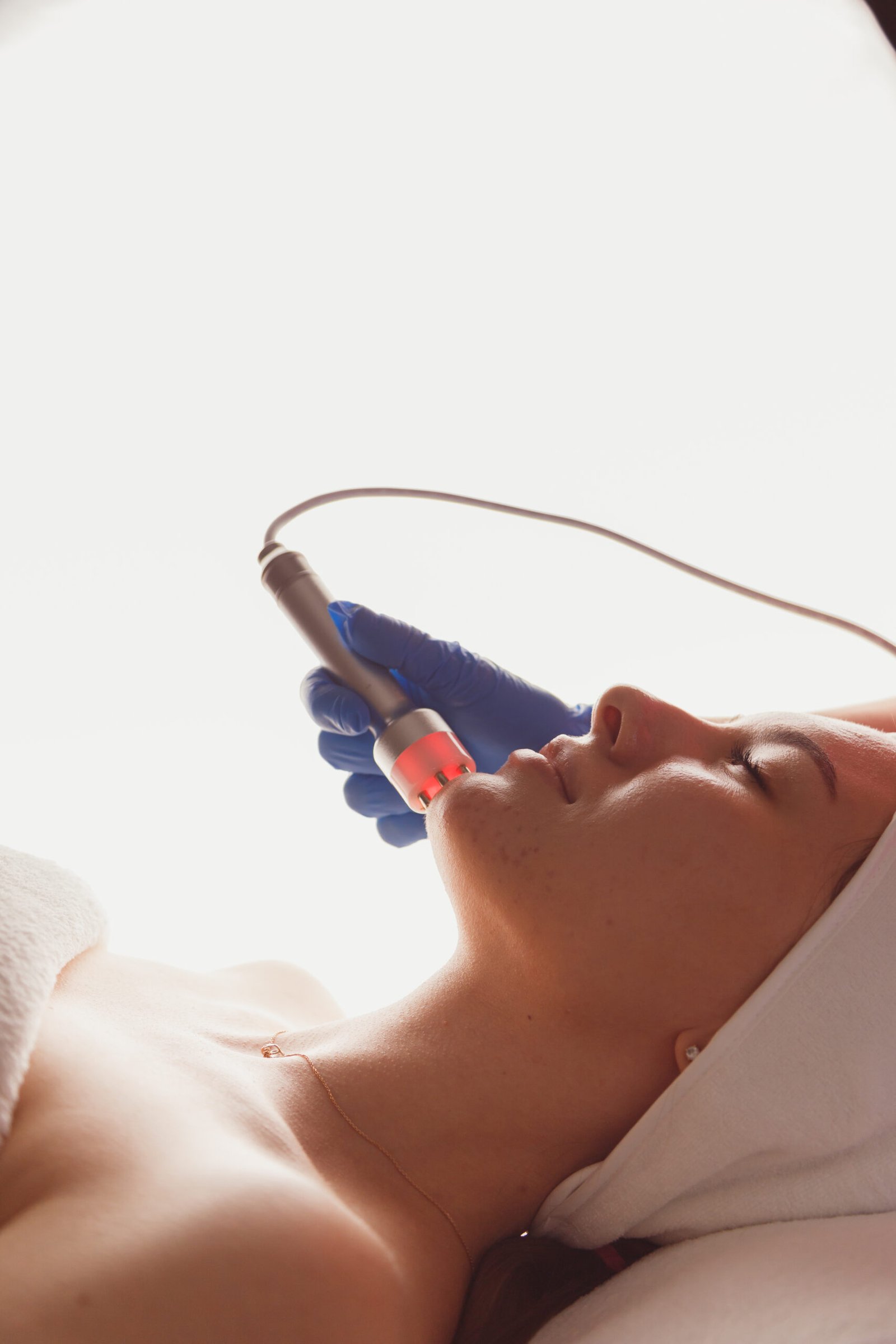
"Every session, the skin remembers how to be younger."
What Is Laser Skin Resurfacing?
Skin accumulates its history. Years of sun exposure, hormonal shifts, acne, and the slow attrition of collagen write themselves into the surface as spots, lines, scars, and an increasing absence of the luminosity that once defined it. Laser skin resurfacing does not mask this history — it rewrites it.
Fractional laser technology works by delivering thousands of microscopic columns of precisely calibrated thermal energy into the dermis. Each column creates a controlled zone of treated tissue surrounded entirely by intact, healthy skin. The body reads these micro-zones as damage — and responds with its most powerful biological repair sequence: accelerated cellular turnover, fresh collagen and elastin synthesis, and a completely renewed epidermis that resurfaces over the following days.
The fractional approach — meaning only a fraction of the skin surface is treated in each pass — is what makes modern laser resurfacing profoundly different from older fully-ablative techniques. The surrounding intact tissue acts as a biological scaffold, dramatically accelerating healing and reducing downtime while delivering results that a topical product or chemical peel simply cannot reach.
Laser resurfacing is part of our lasers & lights suite at Couture Dermatology, and sequences naturally with microneedling and medical chemical peels for a comprehensive skin renewal programme.
What Happens
During Your Session
At Couture Dermatology, every laser session is preceded by a thorough skin assessment. Nothing is templated. Your parameters are set individually, every time.
Skin Assessment
Your board-certified FAAD dermatologist examines your skin in detail — Fitzpatrick type, depth and character of concerns, current skin health — and sets the laser parameters precisely for your anatomy. Intensity, density, and pass pattern are all individualised.
~20 minutesPreparation & Numbing
Medical-grade topical anaesthetic is applied and allowed to work for the full 20 to 30 minutes. Cooling measures are used during treatment. We prioritise your comfort without ever abbreviating the preparation phase that makes that comfort possible.
~30 minutesThe Treatment
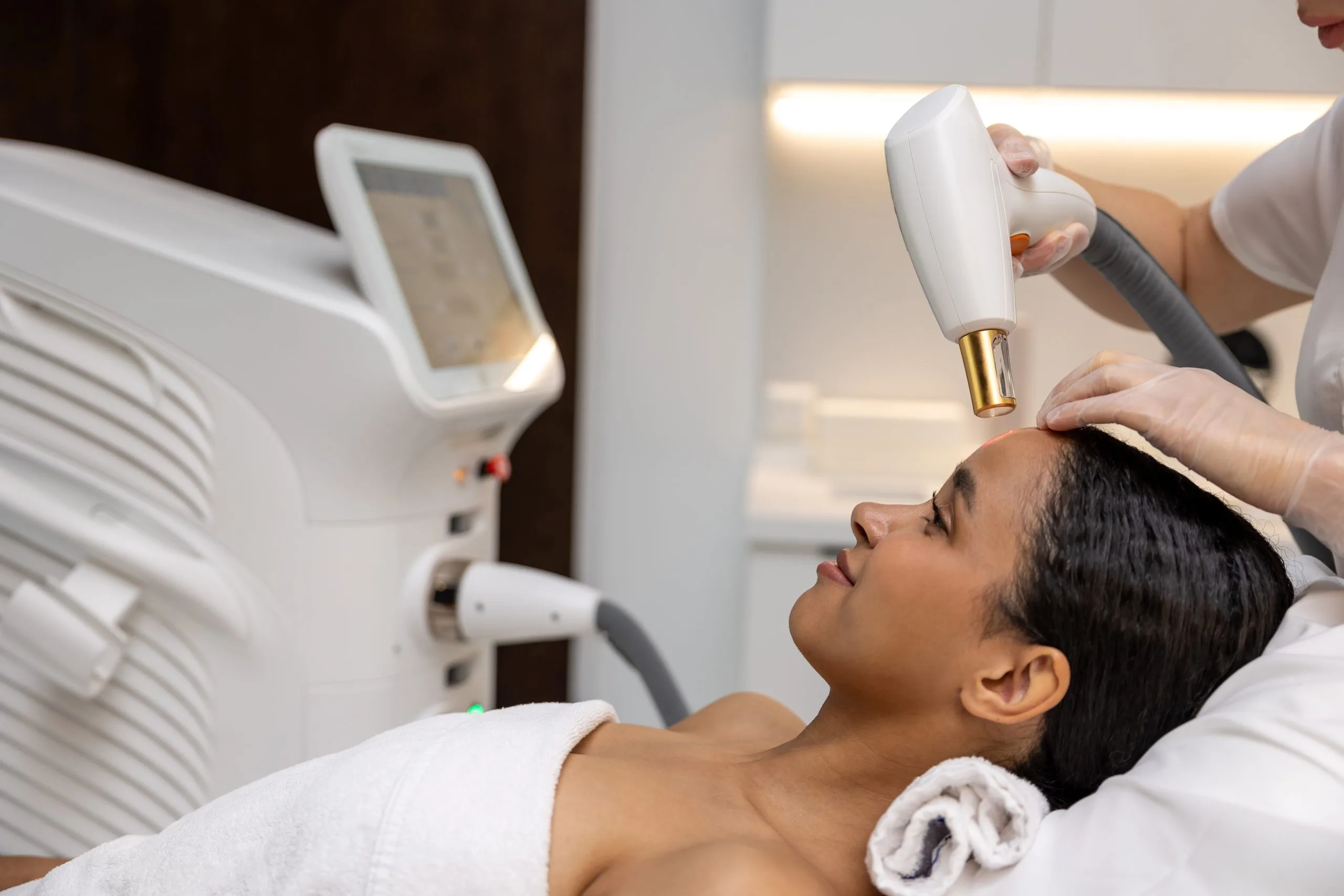
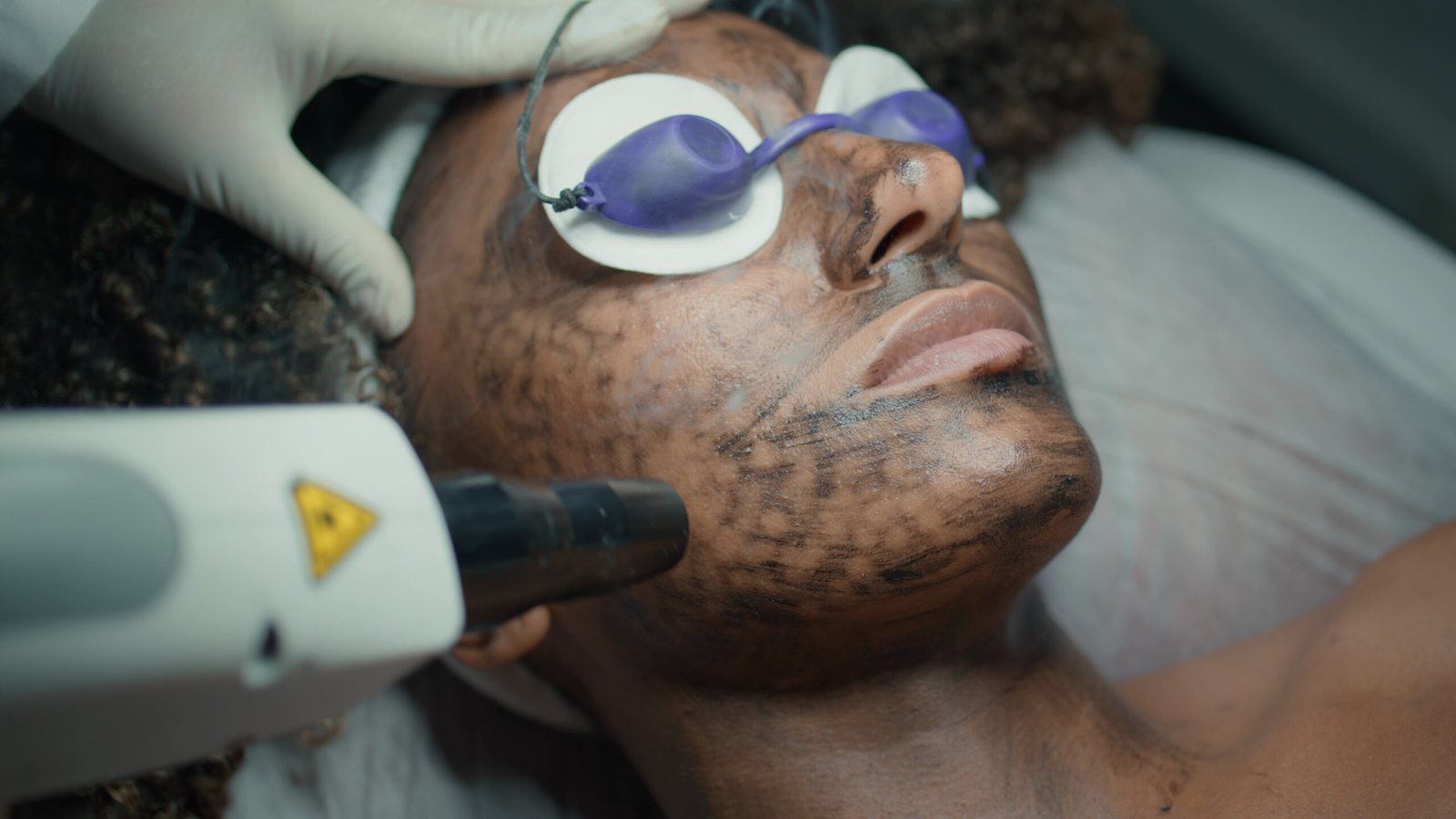
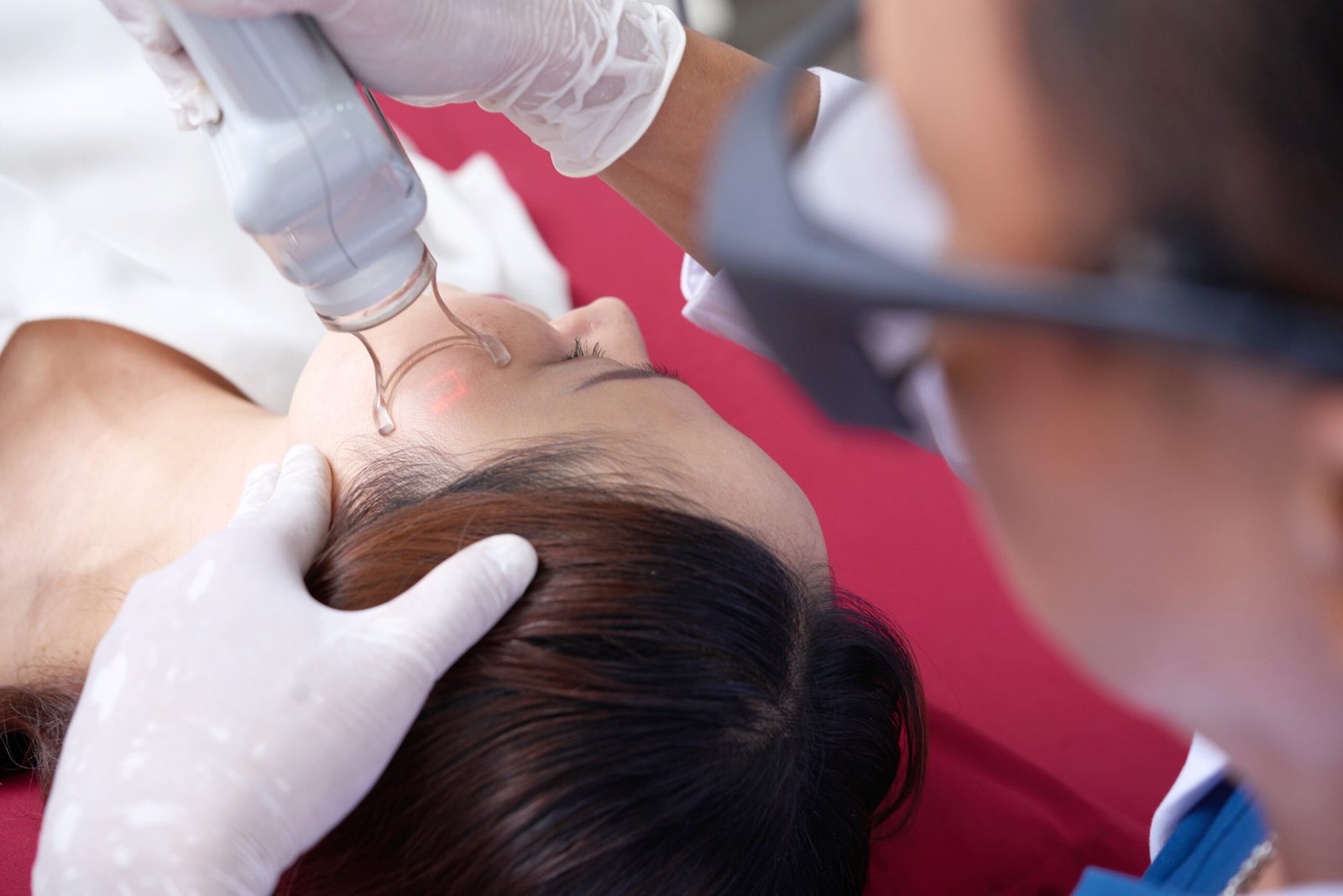
The fractional laser passes over the treatment area in precise, controlled passes. Patients describe the sensation as a warm snapping feeling — brief and entirely manageable with adequate numbing. The entire skin surface is addressed systematically without a single zone missed or over-treated.
30–60 minutesRecovery & Renewal
Redness and warmth are normal immediately after treatment. Over 5 to 10 days, the treated skin peels gradually to reveal the new epidermis underneath. Your dermatologist provides a personalised post-treatment protocol and schedule. Collagen remodeling continues quietly for months.
5–10 days downtimeWhat Laser Resurfacing
Actually Does
Unlike superficial treatments that address the epidermis alone, fractional laser resurfacing works at the level where the skin's structural proteins are made. The changes are not cosmetic corrections — they are biological ones that the skin maintains and builds upon.
"Laser resurfacing does not resurface the face you want to hide. It reveals the skin that was always beneath it."— Couture Dermatology, Beverly Hills, CA
Who benefits most from laser resurfacing?
- Patients with visible acne scarring — rolling, boxcar, or shallow atrophic
- Those with significant photoaging: sun spots, uneven tone, textural roughness
- Individuals with fine to moderate wrinkles seeking lasting structural improvement
- Patients wanting to address enlarged pores and skin laxity simultaneously
- Those seeking results that topicals and peels cannot deliver
- Anyone ready to commit to a recovery period in exchange for meaningful, lasting change
Collagen Remodeling
The thermal injury from fractional laser triggers a fibroblast response that generates new type I and type III collagen — the structural proteins that determine skin firmness, thickness, and resistance to wrinkling. This remodeling process continues for three to six months after each session, meaning results deepen long after the treatment day.
Acne Scar Resurfacing
Fractional laser is among the most clinically validated treatments for atrophic acne scarring. By ablating the fibrotic scar tissue, stimulating collagen to fill depressed scars from below, and resurfacing the uneven epidermis above, a properly sequenced laser series produces progressive, compounding improvement with each session. Results that have defined Beverly Hills dermatology for a generation.
Pigmentation & Sun Damage
Laser energy targets melanin deposits in the epidermis and upper dermis — fragmenting age spots, sun spots, and areas of melasma while simultaneously stimulating the cellular turnover that prevents their recurrence. The outcome is a dramatically more uniform complexion that was always present beneath the accumulated UV damage.
Fine Lines & Wrinkle Reduction
Both superficial fine lines and deeper static wrinkles respond to the combined effect of epidermal resurfacing and dermal collagen induction. The new epidermis is smoother; the dermis beneath it is structurally denser and more resilient. The result is a face that looks rested and younger without looking treated or altered.
Skin Texture & Pore Refinement
Enlarged pores and rough texture are structural dermal problems — not surface ones. Laser resurfacing addresses both by rebuilding the perifoliar collagen that gives pores their architecture, and by generating an entirely new epidermis whose surface is dramatically smoother and more reflective of light. The skin reads as younger under any lighting condition.
[Patient first name, last initial] · [City] · [Verified Patient]
"[Insert verified patient testimonial about their laser skin resurfacing experience at Couture Dermatology here. Should be authentic, specific, and mention at least one clinical outcome — e.g., improvement in acne scars, texture, pigmentation, or overall radiance.]"
— [Patient Name] · [City] · Verified Patient · [Date Optional]
Board-Certified FAAD
Dr. Chinonso Kagha Abisogun, MD, FAAD — a Fellow of the American Academy of Dermatology — performs every laser treatment personally
FDA-Cleared Lasers
Only FDA-cleared fractional laser platforms used — parameters set individually for each patient's Fitzpatrick type and concern
Calibrated, Not Templated
No preset protocols. Laser intensity, density, and pass pattern are adjusted for your skin at every single session
Wilshire Blvd, Beverly Hills
9735 Wilshire Blvd, Suite 216, Beverly Hills, CA 90212 · (310) 444-0946
Skin Concerns We Address
Fractional laser resurfacing is one of the most versatile platforms in aesthetic dermatology. A single modality — calibrated correctly — can address multiple concerns simultaneously, often making it the most efficient and cost-effective path to comprehensive skin renewal.
continues to build
Your Protocol Is
Set to Your Skin
Fractional laser technology is not one fixed setting. Intensity, density, and modality are selected and calibrated for each patient's concern severity, skin type, and recovery tolerance. Your dermatologist presents the full range of options during your consultation.
Lower Intensity · Lighter Recovery
Fractional Non-Ablative Resurfacing
Non-ablative fractional laser delivers thermal energy beneath the surface without removing the epidermis. The skin heats, collagen contracts and stimulates, and improvement accumulates across a series of sessions. Social downtime is minimal — typically 1 to 3 days of redness and mild peeling — making this the appropriate choice for patients with active schedules and early-stage concerns: fine lines, mild pigmentation, early texture changes, and overall radiance improvement. Results are progressive and compound with each treatment.
Higher Intensity · Deeper Results
Fractional Ablative Resurfacing (CO2)
Fractional CO2 laser is the gold standard for significant textural concerns and acne scarring. It ablates the epidermis in micro-columns while delivering controlled heat to the dermis — triggering the skin's most powerful collagen response and removing years of sun-damaged and scarred tissue in a single, precision-controlled procedure. Recovery is more involved — typically 5 to 10 days of peeling and redness — but the results are correspondingly transformative. A single ablative session frequently delivers what a non-ablative series requires multiple treatments to approach.
For Deeper Results,
Sequence With…
Laser resurfacing is powerful in isolation. Sequenced thoughtfully with complementary treatments, it becomes the cornerstone of a comprehensive skin renewal programme that addresses both surface and structure.
Microneedling
Scheduled 4 to 6 weeks before or after a laser series, microneedling operates on a different but complementary collagen-induction pathway — extending the stimulus for new collagen synthesis between laser sessions. Together they address both the deeper dermal scaffold and the upper dermal layers that laser energy is calibrated to spare. The combination produces collagen growth that exceeds what either treatment achieves independently.
Explore microneedling →Medical Chemical Peels
A precisely prescribed peel protocol — typically TCA or glycolic acid-based — in the weeks before a laser series primes the epidermis by accelerating cellular turnover and standardising skin thickness. This enables more uniform laser penetration during treatment and more predictable outcomes. Post-laser, gentle enzyme peels support epidermal renewal during recovery without disrupting the healing process.
Explore peels →Botox & Injectables
Laser resurfacing addresses the structural quality of skin — its texture, evenness, and collagen density. Botox and dermal fillers address its movement, volume, and three-dimensional form. The two approaches target different aspects of aging and complement each other completely. Treatments are sequenced a minimum of 2 weeks apart to allow each to settle and be assessed independently.
Explore injectables →Medical-Grade Skincare
The investment in a laser series is protected — and extended — by a rigorously prescribed skincare protocol. Broad-spectrum SPF 50+ is non-negotiable post-treatment. Retinoids, vitamin C, and growth factor serums prescribed by your dermatologist extend the collagen stimulus and protect the new epidermis from further UV damage. The skin you earn in treatment is kept in skincare.
Explore all treatments →Your Laser Protocol
Begins With Your Skin.
No two skins age identically. At Couture Dermatology on Wilshire Blvd, your board-certified FAAD dermatologist assesses your Fitzpatrick type, the depth and character of your concerns, your recovery timeline, and your treatment goals before recommending a laser modality, intensity, or series length. Accurate treatment recommendations — and accurate quotes — are provided in your consultation, not before.
Beverly Hills, CA 90212
Frequently
Asked Questions
Laser resurfacing invites questions — about downtime, candidacy, what the recovery looks like, and whether the results justify the process. They always do, asked and answered honestly.
This depends entirely on the concern and the modality selected. Lighter non-ablative protocols typically require 3 to 5 sessions spaced 4 to 6 weeks apart. Fractional ablative CO2 treatments may achieve equivalent results in 1 to 3 sessions, spaced 8 to 12 weeks apart to allow for complete healing and collagen maturation between sessions. Your dermatologist will define the appropriate protocol at your consultation.
Non-ablative resurfacing results in 1 to 3 days of redness and mild peeling — comparable to a moderate sunburn that resolves quickly. Fractional ablative CO2 resurfacing involves 5 to 10 days of more significant redness, swelling, and progressive peeling as the new epidermis surfaces. Both protocols are managed with a detailed post-treatment care guide and prescribed skincare from your dermatologist. The process is entirely predictable — we walk you through every day of your recovery in advance.
Fractional technology is considerably safer across a broader range of skin tones than older fully-ablative laser systems, because the surrounding untreated tissue accelerates healing and reduces the inflammatory response that can trigger hyperpigmentation. However, darker Fitzpatrick types (IV–VI) require careful parameter selection, pre-treatment conditioning, and post-treatment management by an experienced FAAD-certified dermatologist. Our board-certified team has specific expertise treating all skin types and will advise candidacy with complete transparency at consultation.
Initial improvement in radiance and texture is visible within 1 to 2 weeks, once peeling has resolved and the new epidermis has settled. Deeper improvements — scar softening, firming, pore reduction, and pigmentation clearance — unfold over 3 to 6 months as collagen remodeling continues post-treatment. Many patients notice their skin still improving 4 to 6 months after their final session. The best results of a laser series are often seen long after the last treatment day.
Yes — fractional laser resurfacing is one of the most evidence-supported treatments for atrophic acne scarring in clinical dermatology. By ablating and remodeling the fibrotic scar architecture and inducing the collagen synthesis that fills depressed scars from the dermis upward, a series of precisely delivered laser treatments produces improvement that is structural and lasting. The optimal protocol — typically fractional CO2 for significant scarring — will be discussed in full at your consultation.
Yes — laser resurfacing integrates thoughtfully into a comprehensive treatment plan. Microneedling sessions are commonly scheduled 4 to 6 weeks between laser treatments to sustain collagen induction on a different biological pathway. Botox and dermal fillers are addressed separately, a minimum of 2 weeks from any laser session. Medical-grade peels prime the epidermis before ablative laser. Your dermatologist at Couture Dermatology will sequence your full programme to maximise both safety and results.