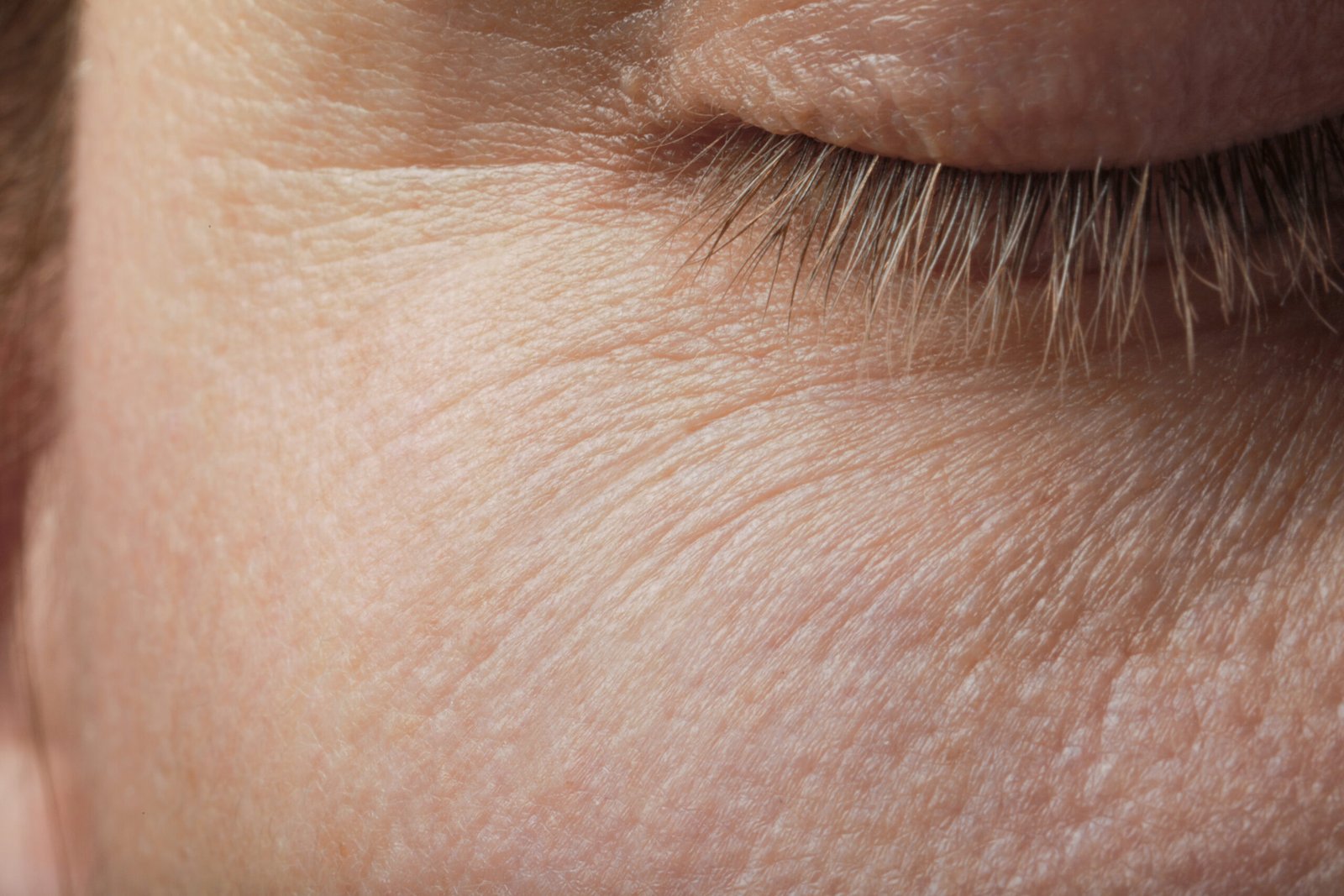
Wrinkle
Softening.
Smoothed.
Not all wrinkles are the same — and not all wrinkle treatments should be. Dynamic lines driven by muscle movement call for a different solution than static creases driven by collagen loss and volume depletion. At Couture Dermatology, our board-certified FAAD dermatologist reads both and designs a protocol for each — using FDA-approved neuromodulators, dermal fillers, and laser resurfacing precisely where the anatomy indicates.
modulator results
incisions
throughout
“The goal is never frozen. The goal is rested, natural — and yours.”
Two Types of Wrinkle.
Two Types of Solution.
Wrinkles are not a single condition. They have two distinct origins — and treating them without understanding which is which leads to results that are either incomplete or simply wrong. Dynamic wrinkles are created by movement: the repeated contraction of the corrugator, frontalis, and orbicularis oculi muscles produces the glabellar furrows, forehead lines, and crow's feet that deepen from expression creases into resting lines over time.
Static wrinkles exist independent of movement. They are the result of collagen and elastin loss, volume depletion in the facial fat compartments, and the slow descent of soft tissue under gravity. Nasolabial folds, marionette lines, perioral creases, and mid-face hollowing are static problems. They are present at rest, they do not respond to neuromodulators, and they require a structurally different approach.
At Couture Dermatology, every wrinkle assessment begins with this distinction. Dynamic lines are addressed with precisely dosed FDA-approved neuromodulators (Botox, Dysport, or Daxxify). Static folds and volume-driven lines are treated with hyaluronic acid or collagen-stimulating fillers. Where fine surface wrinkling and crepey texture are the concern, laser resurfacing or microneedling is the correct tool. Most patients present with a combination — the protocol is designed for all of them.
What to Expect
at Your Visit
Every wrinkle treatment at Couture Dermatology is preceded by an anatomy assessment — not a booking form. Your dermatologist determines exactly which lines require which treatment, and tailors the protocol to your face.
Anatomy Assessment
Your board-certified FAAD dermatologist maps your wrinkles — identifying which are dynamic (movement-driven) and which are static (structural), and selecting the appropriate treatment for each. Dosing and product choice are decided at this stage, never assumed in advance.
Included at every visitTreatment
Neuromodulator sessions are quick — typically 15 to 20 minutes — with ultra-fine needles and topical numbing applied beforehand. Filler sessions take 30 to 45 minutes, with product placed strategically into the precise anatomical planes that restore volume and smooth folds. Laser or energy-based sessions are scheduled separately where indicated.
15–45 minutesImmediate Aftercare
Most patients leave with no visible evidence of treatment. Minimal redness or pinpoint marks at injection sites resolve within hours. You are given precise aftercare instructions — including position guidance for the first four hours after neuromodulators, and ice and bruising management for filler. A follow-up is scheduled at two weeks to assess results and refine if needed.
Back to your day immediatelyResults & Maintenance
Neuromodulator softening appears within three to seven days and lasts three to four months — regular appointments prevent lines from re-deepening between sessions. Filler results are immediate and last six to eighteen months. Laser collagen remodeling develops over three to six months. Each modality is maintained on its own schedule, coordinated by your dermatologist.
Personalised scheduleThe Right Tool
for Each Wrinkle
Wrinkle softening is not a single injection or a single device. It is a clinical decision made wrinkle by wrinkle — matching each treatment to the mechanism responsible for each line. Your dermatologist selects from three distinct approaches, combining them where the anatomy calls for it.
FDA-Approved · Dynamic Wrinkles
Neuromodulators (Botox, Dysport, Daxxify)
FDA-approved neuromodulators precisely reduce the activity of the specific muscles responsible for dynamic wrinkle formation — the corrugators that cause glabellar furrows, the frontalis for forehead lines, the orbicularis oculi for crow’s feet, and the mentalis for chin texture. The overlying skin smooths as the muscle learns to move less forcefully. Results appear within three to seven days and peak at two weeks. Dosing is always conservative first — refinement appointments at two weeks ensure natural, personalised expression is preserved.
HA & Collagen-Stimulating · Static Lines
Dermal Fillers
Static wrinkles — nasolabial folds, marionette lines, perioral creases, and under-eye hollowing — are driven by volume loss and structural descent rather than muscle movement. FDA-approved hyaluronic acid fillers (Juvéderm, Restylane) restore the volume that once held these tissue planes in position, immediately softening the folds above them. Collagen-stimulating fillers (Sculptra, Radiesse) work more gradually, triggering the body’s own collagen production over weeks to months for results that build and last longer. Product selection, injection depth, and placement are all determined by the specific anatomy of each fold.
Laser & Energy · Surface Fine Lines
Laser Resurfacing & Microneedling
Crepey fine lines — the fine, superficial wrinkling on the forehead, around the mouth, and across the décolletage — are an epidermal and upper-dermal problem that neither neuromodulators nor fillers fully address. Fractional laser resurfacing renews the epidermis while inducing new dermal collagen, smoothing fine surface texture that reads as “wrinkled” even when individual folds have been treated. Microneedling achieves a similar collagen-induction effect with less downtime and is often sequenced between laser sessions for sustained surface improvement.
Combined · Most Comprehensive Results
Multimodal Wrinkle Protocol
Most patients present with a combination of wrinkle types — some dynamic, some static, some textural. The most comprehensive wrinkle softening is achieved by addressing all three simultaneously in a sequenced programme: neuromodulators for movement lines, fillers for volume-driven folds, and laser or microneedling for surface fine lines and crepiness. Each modality is scheduled at the appropriate interval. The result is a face that reads as genuinely rested and smooth — not treated in any single visible way, but improved across every dimension that age affects.
What a Precise
Protocol Delivers
Dynamic Lines Genuinely Softened
Correctly dosed neuromodulators reduce the muscle activity responsible for expression lines without eliminating the expression itself. The forehead is smoother; the frown is softer; the crow’s feet are gentler. Movement is preserved. The face reads as rested, not frozen — a result that depends entirely on the injector’s understanding of facial anatomy and their conservatism with dose.
Static Folds Lifted from Within
Dermal fillers placed in the correct anatomical plane — deep to the fold, supporting the tissue architecture that caused it — lift nasolabial folds, soften marionette lines, and restore perioral definition without overfilling or distorting. The result is a face whose proportions read as younger and more rested, not a face with visible filler in it.
Surface Wrinkling Smoothed
Fine crepey lines across the forehead, décolletage, and perioral area are a surface problem — epidermal texture and upper-dermal collagen loss that injections alone cannot address. Laser resurfacing renews the epidermis and induces new collagen, producing a smooth skin surface that no injectable treatment achieves. The two approaches are complementary, not competing.
Natural Expression Preserved
The most important outcome of wrinkle treatment is not the elimination of every line — it is the preservation of the face’s ability to express emotion naturally. At Couture Dermatology, every neuromodulator dose is conservative and reassessed at two weeks. The goal is the face that patients see in a well-rested, well-lit photograph — not a face that reads as medically altered from across the room.
Results That Improve Over Time
Neuromodulator results are immediate — but regular appointments over months and years have an additional benefit: muscles trained to move less forcefully over time produce shallower lines at rest, meaning the depth of treatment required may lessen as the skin is given sustained periods of non-movement in which to recover and smooth. Consistent treatment is preventive treatment.
"The most elegant anti-aging approach is the one that restores what the body had — not adds what was never there."— Couture Dermatology
continues to build
Board-Certified FAAD
Dr. Chinonso Kagha Abisogun, MD, FAAD — every injection and treatment protocol designed and performed by a Fellow of the American Academy of Dermatology
FDA-Approved Products
Only FDA-approved neuromodulators and dermal fillers used — Botox, Dysport, Daxxify, Juvéderm, Restylane, Sculptra, and Radiesse where clinically indicated
Conservative by Design
Every neuromodulator dose starts conservative with a two-week refinement appointment included — natural expression is always the goal, never over-correction
9735 Wilshire Blvd, Suite 216
Beverly Hills, CA 90212 · (310) 444-0946 · Mon–Fri 9AM–6PM
Lines & Folds
We Address
Wrinkle softening is effective across the full face and décolletage. Each line or fold is assessed individually — the treatment selected is determined by whether the wrinkle is dynamic, static, or textural in origin.
Forehead Lines
Dynamic horizontal lines from frontalis movement — softened with conservative neuromodulator dosing that preserves natural brow movement
Glabellar Furrows
The “11” lines between the brows from corrugator activity — the most commonly treated area with neuromodulators, with results typically visible within 3 to 5 days
Crow’s Feet
Lateral orbital lines from orbicularis oculi activity — treated with neuromodulators, often combined with under-eye filler for comprehensive periorbital rejuvenation
Nasolabial Folds
Static folds from mid-face volume loss — addressed with hyaluronic acid fillers placed deep to the fold to lift from the correct anatomical plane
Perioral & Lip Lines
Vertical lip lines and perioral creases — addressed with a combination of neuromodulators, filler, and laser resurfacing depending on their depth and origin
Neck Bands & Décolletage
Platysmal neck bands treated with neuromodulators; décolletage fine lines and crepey texture addressed with laser resurfacing or collagen-stimulating fillers
Is Wrinkle Softening
Right for You?
- Adults of any age who notice dynamic expression lines beginning to appear at rest, rather than only with movement
- Those with nasolabial folds, marionette lines, or perioral creases that are present without any expression
- Patients with fine crepey surface wrinkling that injectable treatments alone have not fully resolved
- Anyone who has tried over-the-counter treatments and found them insufficient for the depth or character of their wrinkles
- Patients in their late twenties or thirties seeking preventive neuromodulator treatment before lines engrave at rest
- Those who want results that look natural from every angle and in every lighting condition — not results that announce themselves
When wrinkle treatment has limits
Non-surgical wrinkle softening is highly effective for dynamic and mild-to-moderate static lines — but it has clinical limits. Very deep, long-established static folds with significant soft-tissue ptosis may require surgical repositioning to fully address. Our board-certified FAAD dermatologist will be direct with you about what treatment can achieve for your specific anatomy — and where the realistic ceiling of non-surgical results lies.
The consultation is always the starting point. No treatment is committed and no product is selected before your dermatologist has examined your face and discussed the realistic outcomes for your anatomy with full transparency.
For Deeper Results,
Sequence With…
Wrinkle softening addresses the lines already present. These treatments extend the result — maintaining surface quality, restoring structural support, and protecting the skin that treatments have worked to improve.
Skin Tightening
Wrinkle softening addresses the surface expression of aging — the lines and folds visible at rest. Non-surgical skin tightening addresses the underlying structural cause — the loss of collagen and elastin that allows the tissue to descend and the skin to crease. The two approaches are not interchangeable; they are sequential. Most patients benefit from both, designed as a unified programme.
Explore skin tightening →Laser Skin Resurfacing
Injectable wrinkle treatment and laser resurfacing address different dimensions of the same problem. Fillers and neuromodulators address fold depth and movement-driven lines; laser resurfacing addresses the skin surface quality above them — fine crepey texture, uneven tone, and enlarged pores. Scheduled 4 to 6 weeks apart, the two approaches produce a comprehensive result that neither achieves independently.
Explore laser resurfacing →Jawline Contouring
Perioral and marionette lines are partly a wrinkle problem and partly a structural one — the descent of the lower face changes the proportions that once framed the mouth. Jawline filler restores the mandibular architecture that pulls marionette lines taut, amplifying the softening that perioral injections alone achieve. The two treatments are natural partners for complete lower-face rejuvenation.
Explore jawline contouring →Medical-Grade Skincare
The results of injectable and laser wrinkle treatment are protected — and extended — by a dermatologist-prescribed skincare protocol. Retinoids accelerate epidermal turnover, maintaining the surface smoothness achieved with treatment. Broad-spectrum SPF 50+ prevents UV-driven collagen breakdown that accelerates wrinkling. Peptide and growth factor serums support the dermal quality between appointments. Treatment is the intervention; skincare is the maintenance.
All treatments →Your Lines.
Our Precision.
Wrinkles present differently in every patient — in type, depth, location, and origin. At Couture Dermatology, your board-certified FAAD dermatologist assesses your face in full before recommending any injectable, device, or treatment combination. No product is selected and no dose is committed before your anatomy has been examined and your goals honestly discussed.
Beverly Hills, CA 90212
Frequently
Asked Questions
Direct answers to the questions patients most commonly bring to their consultation — on what to expect, how long results last, and how to tell which treatment is right for their wrinkles.
Dynamic wrinkles form from repeated muscle movement — the lines that appear when you squint, frown, or smile and deepen over years into visible creases even at rest. These respond best to neuromodulators like Botox or Dysport. Static wrinkles are present at rest and result from collagen loss, volume depletion, and gravitational descent — they respond to fillers, laser resurfacing, or a combination of approaches. Many patients present with both types, requiring a combined protocol designed for their specific anatomy.
FDA-approved neuromodulators typically last 3 to 4 months in most patients. Daxxify, a newer neuromodulator, can last 6 months or longer in some patients. Results appear within 3 to 7 days of injection and reach their peak at approximately 2 weeks. Regular maintenance appointments preserve the softening effect and, over time, may reduce the depth of existing lines as the muscle learns to move less forcefully.
Natural-looking results depend entirely on accurate assessment of the individual’s muscle anatomy, selecting appropriate doses, and preserving enough movement for genuine expression. At Couture Dermatology, every neuromodulator treatment is conservative by design — the goal is softened, rested-looking skin, not frozen or expressionless. Dosing is always adjustable at a follow-up appointment two weeks after treatment.
Neuromodulator injections have essentially no downtime — patients return to normal activities immediately. Mild redness or pinpoint bruising at injection sites resolves within 24 to 48 hours. Dermal filler treatment may involve 1 to 3 days of mild swelling. Laser resurfacing for fine lines involves 3 to 7 days of redness and peeling depending on intensity. Your dermatologist will discuss the recovery specific to your chosen protocol.
Yes — for patients who prefer to avoid neuromodulators, static fine lines and textural wrinkles respond well to dermal fillers, fractional laser resurfacing, and microneedling. Collagen-stimulating fillers like Sculptra address volume-driven lines over time. Laser resurfacing resurfaces the epidermis and induces new collagen, smoothing fine lines from within. The appropriate non-neuromodulator approach depends on the character and location of the wrinkles being treated.
There is no single correct age — the right time to start is when lines begin to appear at rest rather than only with expression, or when expression lines are beginning to engrave themselves into the skin. Preventive neuromodulator treatment in the late twenties or early thirties can slow the deepening of dynamic lines significantly. A consultation with our board-certified FAAD dermatologist is the most accurate way to determine what — if anything — is clinically indicated for your skin at this point.